Democracy: How Valuable Is a Single Vote?
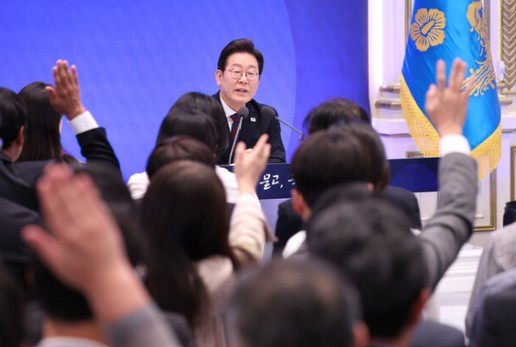
During the President’s first-anniversary press conference, a Singaporean journalist raised a question regarding the ballot shortage incident that occurred during South Korea’s recent local elections.
The question was straightforward:
“What is your view on the fact that some citizens were unable to vote because ballot papers ran out, and what measures will be taken to prevent this from happening again?”
In response, the President described the incident as “unacceptable” and “an embarrassment to democracy.” He acknowledged that he initially believed the shortage may not have significantly affected the election outcome. However, he later realized that the issue was not about the result itself but about the violation of citizens’ voting rights.
At the same time, he emphasized that concerns about ballot shortages should not automatically be equated with claims of election fraud. He stated that further investigation and institutional improvements would be necessary.
On the surface, this may appear to be a reasonable response.
Yet many citizens continued to express disappointment after the press conference.
Why?
Perhaps because what people wanted to hear was not merely an assessment of the incident but a stronger reaffirmation of democratic principles.
In a democratic society, elections are more than a process for selecting winners and losers.
They represent the most fundamental exercise of popular sovereignty. Every ballot paper symbolizes an individual’s right to participate in shaping the future of their country.
For this reason, the legitimacy of an election depends not only on the outcome but also on the integrity of the process.
If even one eligible voter is unable to cast a ballot due to administrative failures, democracy itself suffers a setback.
Of course, no administrative system is perfect.
Mistakes can happen. Ballot quantities may be miscalculated. Logistical problems may arise. Election officials may make errors.
However, what distinguishes a mature democracy is not the absence of mistakes but how those mistakes are addressed.
Citizens generally care less about hearing that “the outcome was unaffected” and more about hearing that “every citizen’s right to vote matters.”
Voting rights cannot simply be measured in numbers.
Imagine a scenario where 100 citizens are unable to vote, but the winning margin is 100,000 votes. Does that mean there is no problem?
From a democratic and legal perspective, the answer is no.
Democracy is built upon procedural legitimacy before it is built upon electoral outcomes.
This is why election-related irregularities often receive serious scrutiny in established democracies.
The frequently cited case of Berlin, Germany, illustrates this principle. Administrative failures, including ballot shortages and logistical confusion, led to legal challenges and eventually the partial repetition of elections. The issue was not primarily whether the outcome would change, but whether citizens had been given a fair opportunity to exercise their democratic rights.
In the recent press conference, the President did acknowledge the seriousness of the voting rights issue.
That deserves recognition.
However, many observers felt that important questions remained unanswered.
Why did the ballot shortage occur?
Who should be held accountable?
What specific reforms will be implemented?
How can citizens be assured that the same problem will not happen again?
Clear answers to these questions are essential for maintaining public trust.
Ultimately, democracy depends on confidence.
Citizens must believe that their voices matter and that their participation is respected.
When people feel that every vote is protected, trust grows stronger.
When they feel that voting rights can be dismissed as a minor inconvenience, confidence in democratic institutions may weaken.
A balanced and rational perspective requires avoiding extremes.
Administrative failures should not automatically be interpreted as evidence of organized election fraud.
At the same time, the argument that “the result was not affected, therefore the problem is insignificant” does not fully align with democratic values.
The true strength of democracy lies not in who wins or loses an election, but in whether every citizen is treated equally under the electoral process.
The principle that every vote matters is not merely a slogan.
It is the foundation upon which democratic legitimacy is built.
Only when that principle is consistently upheld can citizens trust election results and maintain confidence in the democratic system itself.
댓글 남기기